Source Hot Galvanized Sow Farrowing Pen for Piglets, Sows, and Farms
Source hot galvanized sow farrowing pen units from 30 verified listings. Compare specifications including PVC panels, stainless steel feeders, and hot-dip galvanized structures for modern pig farming operations.
Key considerations
Products List




Comprehensive Sourcing Guide
Hot Galvanized Sow Farrowing Pen Sourcing Guide
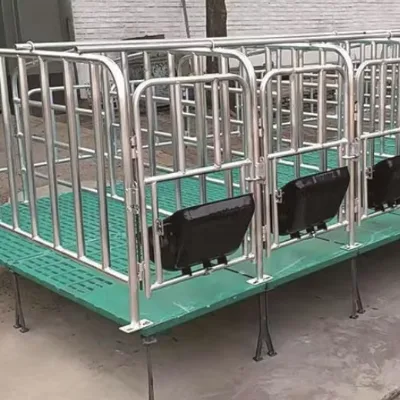
The hot galvanized sow farrowing pen is a critical infrastructure component designed to separate sows from piglets during the farrowing process, ensuring the safety of the newborns while maintaining the health and mobility of the mother. These units are typically constructed from hot-dip galvanized steel pipes to provide superior resistance against corrosion in the humid and chemically aggressive environment of a pig farm. The primary function of the pen is to create a controlled micro-environment where the sow can lie down safely without crushing the piglets, while the piglets have access to a dedicated warming area and feeding stations.
Procurement of these pens requires a focus on structural integrity and material durability, as the equipment must withstand constant physical stress from the animals and frequent cleaning cycles. Buyers should look for products that feature a connected structure with floor-standing installation methods, which offer stability without the need for complex anchoring systems. The inclusion of specific components like PVC panels for fencing and pure PP material for plastic floors helps maintain hygiene and reduces the risk of injury to the piglets, making the selection of the right material composition a primary decision point for facility managers.
Product Scope and Observed Listing Signals
When evaluating the market for hot galvanized sow farrowing pens, buyers will encounter a range of product configurations that vary in dimensions and accessory packages. Observed listings indicate standard dimensions such as 2.4 meters by 1.8 meters or larger configurations like 2.4 meters by 3.6 meters, with some suppliers offering fully customized sizes to fit specific farm layouts. The product scope generally includes the main crate structure, a sow and piglet feeder made of stainless steel, and optional accessories like drinking bowls and warming boxes equipped with heating floors or lamps to support piglet survival rates.
Listing signals also reveal that these products are often marketed as new condition items with a competitive advantage derived from cooperation with universities for design optimization. The packaging methods observed range from wooden boxes and pallets to sea transportation belts, indicating that logistics planning must account for the bulk and weight of the galvanized steel components. Buyers should note that while some models come with a fixed model number like HY-PFC or HY-FC01, many suppliers emphasize their ability to offer customized designs, allowing for flexibility in the final product specifications to match unique operational needs.
Technical Specifications to Verify
The structural integrity of the farrowing pen relies heavily on the quality of the hot-dip galvanization process, which should be verified as an "over all" treatment to ensure complete corrosion protection. Buyers must confirm that the frame is constructed from hot-dip galvanized pipes and that the floor options, whether plastic or cast iron, meet specific dimensional requirements such as 600 by 700 millimeters for cast iron variants. The feeder troughs should be specified as SS 304 stainless steel to prevent rust and ensure food safety, while the plastic floor components should be identified as pure PP material to guarantee durability and ease of cleaning.
Dimensional verification is equally critical, as the standard product specifications often cite sizes like 2400mm by 1800mm by 1050mm, though custom designs are frequently available. The installation method is typically floor-standing, requiring the buyer to ensure the site preparation aligns with the base and snap joint fixtures provided. Additionally, the heating systems, which may include warming boxes with heating floors or lamps, must be compatible with the pen's structure, and the power source for any automated components should be confirmed as manual labor or compatible with the farm's existing electrical infrastructure.
Compliance and Safety Documentation
Ensuring that the farrowing pens meet international safety and quality standards is a prerequisite for long-term operational success and regulatory compliance. Buyers should request documentation verifying certifications such as ISO2001 and CE, which indicate that the manufacturing processes and product safety have been audited against recognized benchmarks. While specific test results are not always listed in general product descriptions, the presence of these certifications suggests that the supplier adheres to established quality management systems and safety protocols relevant to agricultural machinery.
Safety documentation should also cover the warranty terms, which in observed listings range from 15 to 20 years, reflecting the manufacturer's confidence in the longevity of the hot-dip galvanized finish. This extended warranty period serves as a proxy for the expected service life of the equipment, provided that the installation and maintenance follow the manufacturer's guidelines. Buyers must ensure that the supplier provides clear instructions for equipment installation and after-sale support, as the complexity of assembling connected structures and integrating heating elements requires professional guidance to prevent safety hazards.
Cost Drivers and Commercial Terms
The cost of hot galvanized sow farrowing pens is influenced by several key factors, including the volume of material used, the extent of the galvanization process, and the level of customization required. Observed price ranges in the market span from 30 to 600 USD, though this variance likely reflects differences in unit size, material thickness, and the inclusion of additional accessories like stainless steel feeders or heating systems. Buyers should be aware that the Minimum Order Quantity (MOQ) can vary significantly, ranging from a single unit to 100 units, which impacts the per-unit cost and the feasibility of small-scale procurement.
Commercial terms regarding shipping and payment are equally important, with observed packing methods including wooden boxes, pallets, and sea transportation belts. The origin of the products is typically Henan, China, which affects lead times and logistics costs depending on the buyer's location. Buyers should clarify whether the quoted price includes the cost of the free pig farm design service and free instruction of equipment installation, as these value-added services can reduce overall project costs. Additionally, the tier structure of the pricing, often listed as a single tier, suggests that volume discounts may be negotiated directly rather than being automatically applied based on a fixed tiered schedule.
Supplier Qualification and Quality Control
Selecting a qualified supplier involves verifying their status as a direct manufacturer rather than a trading company, as this often ensures better control over the production process and pricing. Many suppliers in this sector explicitly state that they are manufacturers located in Henan, China, and offer services such as free pig farm design, which indicates a high level of technical expertise and customer support. Buyers should prioritize suppliers who demonstrate a commitment to quality through their use of high-quality materials and their adherence to strict surface treatment processes like hot-dip galvanization.
Quality control measures should be validated through the supplier's warranty offerings and their track record of cooperation with academic institutions for product development. The availability of a 15 to 20-year warranty is a strong indicator of the supplier's confidence in their product's durability and resistance to environmental degradation. Furthermore, buyers should assess the supplier's ability to provide detailed installation instructions and after-sale support, as the successful deployment of farrowing pens depends on proper assembly and the correct integration of heating and feeding systems.
Long-Term Procurement Checks
Establishing a long-term procurement relationship requires ongoing verification of the supplier's ability to maintain consistent quality and supply chain stability. Buyers should regularly review the supplier's adherence to the specified standards, such as the 2.4 by 1.8-meter or 2.4 by 3.6-meter dimensions, and ensure that any custom orders continue to meet the original design specifications. It is also essential to monitor the supplier's response to after-sale issues, particularly regarding the installation instructions and the functionality of the heating and feeding accessories over time.
Finally, buyers should periodically reassess the competitive advantages offered by the supplier, such as their university collaborations and design services, to ensure they remain relevant to evolving farming practices. The longevity of the equipment, supported by the hot-dip galvanized finish and the robust construction of the connected structure, should be evaluated against actual field performance to validate the initial warranty claims. By maintaining a proactive approach to supplier management and quality verification, buyers can ensure that their farrowing pens continue to provide a safe and efficient environment for sows and piglets for decades.
FAQs
What materials are used in the pig farrowing crate construction?
The farrowing crate is constructed using hot-dip galvanized pipes for the main frame to ensure durability and corrosion resistance. The flooring options include pure PP plastic material or cast iron floors measuring 600 by 700mm. Additionally, PVC panels are used for fencing, and stainless steel is utilized for the sow and piglet feeders to maintain hygiene and longevity in farm environments.
Can the farrowing pen dimensions be customized for specific farms?
Yes, customization is available for the farrowing pen to meet specific farm requirements. Standard sizes include 2400mm by 1800mm by 1050mm or 2.4 by 3.6 meters. The manufacturer offers design services and can adjust the structure according to your needs, ensuring the equipment fits your facility layout perfectly while maintaining the connected structure and floor-standing installation method.
What certifications does the hot galvanized sow farrowing pen have?
The product holds ISO2001 and CE certifications, indicating compliance with international quality and safety standards. These certifications ensure that the manufacturing process and final product meet rigorous industry requirements. The hot-dip galvanization treatment further enhances the structural integrity, providing a warranty of 15 to 20 years for the galvanized components against rust and wear.
How is the farrowing crate installed and what accessories are included?
The farrowing crate uses a floor-standing installation method with fixtures such as bases and snap joints for secure assembly. Included accessories feature a feeding trough for piglets made of SS 304 stainless steel and a drinking bowl. The system may also include a warming box with a heating floor or heating lamp to support piglet health, ensuring a complete setup upon delivery.
What is the packaging and shipping method for the farrowing pen?
The product is packed in wooden boxes or on pallets, secured with packing belts for safe transport. Shipping options include LCL or FCL sea transportation, depending on the order volume. The factory in Henan, China, handles the logistics, ensuring the hot-dip galvanized equipment arrives in good condition. This packaging method protects the surface treatment and structural components during international transit.